Malta is a safe and relaxed place to study, and most of its rules are the ones you would follow at home. A few are different, a few surprise students every summer, and one or two carry real penalties. The ELT Council, the government body that oversees English language schools, sets them out in a guidebook for students. Here they are, with the context the guidebook leaves out.
Keep these with you
The guidebook asks students to carry three things at all times:
- The student card your school gives you, as identification.
- The contact details of your school and your accommodation, in case you get lost.
- A list of emergency numbers. The one that matters is 112, for police, ambulance and fire.
Noise and the Maltese day
Students live in residential streets, and the complaints that reach schools are mostly about noise. The guidebook is precise about the hours:
- Keep music down between 13:00 and 16:00, when some people take a siesta.
- Keep it down after 23:00, when families settle for the night.
- Do not make noise in the street at any time, including when waiting for friends or a bus.
- Do not sit on residents’ steps or lean on parked cars.
If you live in a student residence, the same rules apply, plus one more from the guidebook: never throw anything from windows or balconies.
Beach, streets and churches
- Put on a top or a T-shirt when you leave the beach. Swimwear in the street is not acceptable in Malta.
- The guidebook tells female students not to bathe topless anywhere.
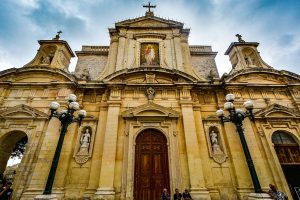
- Cover shoulders and knees when you visit a church or other holy places.
- Use the bins. Malta asks visitors to help keep public spaces clean.
Village feasts bring crowds, fireworks and closed streets through the summer. They are part of local life, and our guide to public holidays and opening hours explains how they affect buses and shops.
Alcohol and smoking
- The legal age is 17. The guidebook states that you may not buy or consume alcohol if you are younger than 17. Junior programmes enforce this strictly.
- Do not drink in the street. The guidebook asks students not to, and some local councils have banned drinking in public places.
- No smoking in public places. The guidebook states it plainly, and it covers bars, restaurants and public buildings.
Drugs, including cannabis
The guidebook warns that possession of illegal drugs during your stay leads to possible legal action and deportation. It was written before Malta’s cannabis reform, passed by Parliament in December 2021, which allows adults limited personal possession. That reform does not make cannabis a free-for-all:
- It applies only to adults, never to junior students.
- Using cannabis in a public place remains an offence.
- Every other illegal drug stays illegal, with the consequences the guidebook describes.
Schools add their own rules on top, and breaking them on a junior programme usually means being sent home.
Knives and weapons
The guidebook is blunt: it is illegal to carry any sort of weapon, knives included. That covers the pocket knife you might pack for a picnic. Leave it at home.
Getting around safely
- Traffic drives on the left, as in the UK. Look right first when you cross.
- Cross at zebra crossings or pedestrian lights, and wait until cars have stopped.
- Walk on the pavement, even where it is narrow.
- Do not hitch-hike. Use school transport, buses or licensed taxis. Our page on taxis and cabs in Malta lists the options.
- Avoid walking alone at night in areas you do not know, and avoid being alone on beaches after dark.
- Do not dive from rocks or cliffs. The guidebook flags it as a cause of serious accidents.
On a junior programme
Half the students at Malta’s licensed schools were 17 or under in 2025, according to the NSO. Junior programmes run on stricter rules than adult courses: a curfew set by the school or the host family, activities supervised by a group leader, and no alcohol at all for under-17s. The guidebook asks juniors to respect their curfew time. Parents should read the school’s junior rules before departure, because breaking them usually ends the stay early.
Your belongings
The guidebook asks students never to leave valuables unattended and to avoid carrying large amounts of cash. On the beach, that means not leaving your bag on the sand while you swim. In nightlife streets, it means keeping your phone in a front pocket.
When something goes wrong
- Emergency: call 112.
- A problem with your accommodation: tell your school’s accommodation coordinator straight away. The guidebook says so explicitly, and schools move students when needed.
- A health problem: see our guide to healthcare in Malta for students.
- A course problem: speak to your group leader or the director of studies.
The common thread is respect for the people who live here year round. Students who keep the noise down, dress for the street and treat the island as a home rather than a resort get a warmer welcome, and that is worth something when you are looking for people to speak English with.