Mdina is the old capital of Malta, a walled town on a hill in the centre of the island, and about three hundred people still live inside it. Cars belong to residents only, which is why it earned the name the Silent City. Most visitors see it in ninety minutes as a stop between Valletta and the coast. That is enough to walk the main street, and not nearly enough to understand what you are looking at.
Three thousand years in one hilltop
The site was chosen for the obvious reason. It sits high, inland, and you can see almost the whole island from its walls, which mattered when raiders came from the sea.
The Phoenicians settled here first. The Romans made it their administrative centre and called it Melite, a town considerably larger than the one standing today. The Arabs arrived in the ninth century, cut the town down to a defensible core, dug the ditch that still separates Mdina from Rabat, and gave it the name it kept. Mdina simply means the city.
It stayed the capital under the Normans and through the medieval period, governed by the local nobility. When the Knights of St John arrived in 1530 they wanted a harbour, not a hilltop, and moved their seat to the coast. Mdina was left to the old families, which is precisely why it survived. Nobody rebuilt it.
The earthquake of 1693 changed its face. Much of the town was damaged, and the reconstruction that followed gave Mdina the baroque frontages you see today, laid over a medieval street plan that never moved.
What to see inside the walls
The Main Gate
The ceremonial entrance dates from the 1720s and was designed to impress rather than defend. Cross the bridge, look up at the coats of arms, and notice how the gate is set at an angle to the street behind it. That is deliberate. An attacker through the gate faced a wall, not a straight run into the town.
Television viewers will recognise it. The gate stood in for the entrance to King’s Landing in the first season of a well known fantasy series, and it is one of several Maltese locations used for that production, as our page on the filming locations across the islands sets out.
St Paul’s Cathedral
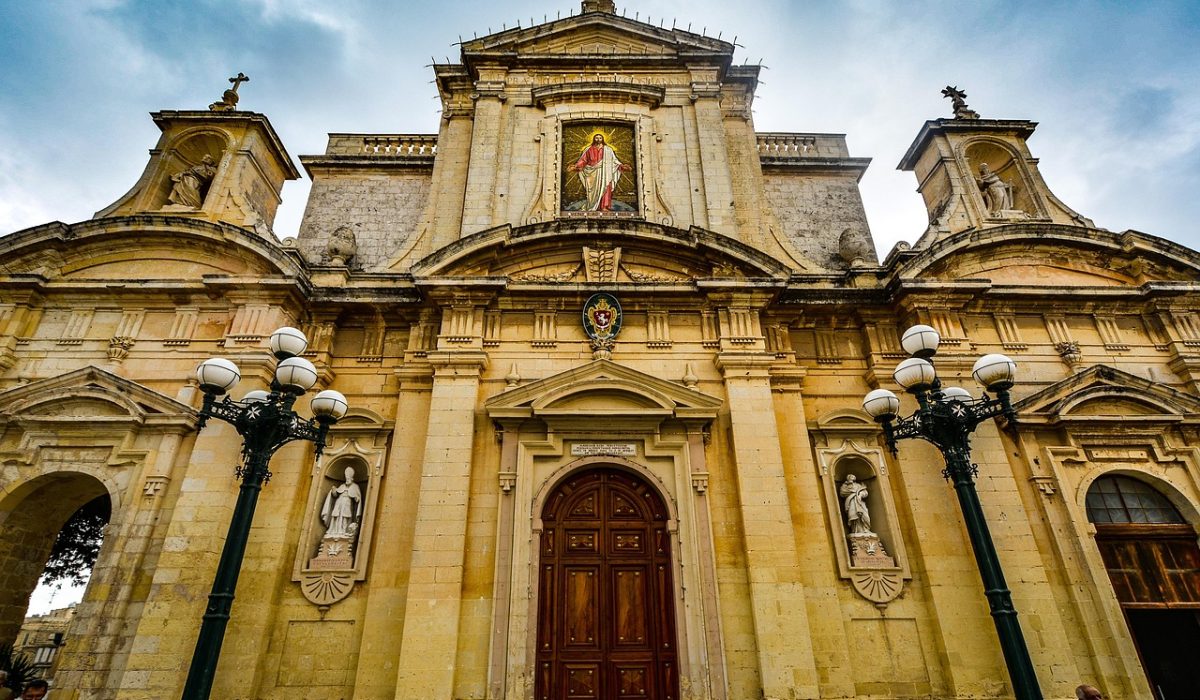
Built on the spot where, by tradition, the Roman governor Publius met the shipwrecked apostle. The current church went up after the earthquake, to a design by Lorenzo Gafa, and its restraint is unusual for the period. The floor is a carpet of marble tombstones marking the burials of Maltese nobility and clergy. The attached museum holds a collection of engravings by Durer that few people expect to find on a small island.
Palazzo Falson
A medieval townhouse kept as its last owner left it, filled with armour, paintings, silver and books. It gives you something the churches cannot, which is a sense of how people actually lived behind these walls.
Bastion Square
The viewpoint on the northern walls. On a clear day you see across the centre of the island to the harbour and the sea beyond. Come at sunset if you can.
The streets themselves
Step off Villegaignon Street, the main axis, and the crowds vanish within thirty seconds. The narrow lanes, the shaded corners, the closed doors with heavy knockers shaped like dolphins and lions. This is the part people remember, and it costs nothing.
The walls and the ditch
Walk the perimeter rather than only the main street. The bastions were rebuilt by the Knights in the sixteenth and eighteenth centuries on far older foundations, and the change in stonework is visible if you look at the courses. Below them runs the ditch that the Arabs cut to separate the fortified core from the suburb beyond, now planted as a garden and open to walk through.
From the ditch you get the scale that the interior hides. Mdina looks modest from inside, because the buildings press against each other. From below the walls it reads as what it was, a fortress designed to hold out until help arrived from the coast.
Rabat, immediately outside
Mdina and Rabat were one town until the Arabs shrank the walls. Rabat is where the Roman city spilled out, and it holds things Mdina does not.
St Paul’s Catacombs are a large complex of underground burial chambers from Roman and Byzantine times, and they are the clearest picture you will get of early Christian Malta. St Agatha’s Catacombs nearby include painted frescoes. The Domus Romana preserves the mosaic floors of a wealthy Roman house.
Rabat also has the cafes. Mdina has very few places to eat, and they charge for the address. Walk five minutes out for lunch.
When to go
The Silent City is not silent between ten in the morning and four in the afternoon. Coaches arrive, the main street fills, and the effect the place is famous for disappears entirely.
- Early morning, before the first coaches, is the best time of all. The light is good and the streets are genuinely empty.
- Evening is the other answer. Day visitors leave, the lamps come on, and the walls take on a colour that no photograph at noon will give you.
- Sunday mornings during services are quiet outside the cathedral but restricted inside it.
- Winter suits Mdina better than summer. There is little shade, the stone reflects heat, and the town is small enough to see in cool weather.
Getting there and practical details
Buses run to Rabat from Valletta and from the main tourist areas, and the stop leaves you a short walk from the bridge. Driving is possible, but you park outside the walls, and the car parks fill early in season.
The town is small. You can cross it in ten minutes on foot. What takes time is the cathedral, the museums and the sitting still.
A few practical points that catch people out. The streets are cobbled and uneven, so sensible shoes matter more here than in Valletta. Churches enforce dress codes covering shoulders and knees. Public toilets are scarce inside the walls. And because residents live here, several of the most photogenic corners are private doorways, worth remembering before you set up a tripod.
How long to give it
Half a day covers Mdina and Rabat together at a reasonable pace, with the catacombs included. Two hours covers Mdina alone if you skip the museums.
The mistake is to bolt it onto a coach itinerary that gives you forty minutes. You will see the gate, the main street and a viewpoint, and you will leave thinking it was pretty and small. Give it a morning and it becomes the most interesting town on the island, which is what our wider guide to the historical sites worth your time in Malta puts it alongside.
Why it stays with people
Malta has grander buildings in Valletta and older ones at the temples on the southern cliffs. Mdina has something neither offers, which is continuity. The same families have lived behind these walls for centuries, the street plan has not changed since the Middle Ages, and the town has never been rebuilt for anyone’s convenience.
Stand in a side lane at eight in the evening, with the day visitors gone and a door closing somewhere out of sight, and the name makes sense.